
Why inspiring young people is an economic strategy
19th Nov 2026
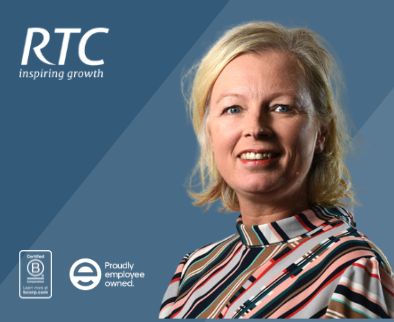
By Claire Willis, RTC North
The launch of the North East Enterprise and Entrepreneurship Pilot is another positive signal of the ambition we are seeing across our region to invest in young people and connect them more closely with the world of business.
The initiative, backed by Goldman Sachs Gives and entrepreneur Sir Richard Harpin and delivered with The Careers & Enterprise Company and the North East Mayoral Strategic Authority , will connect young people from ten North East schools with entrepreneurs, start-ups and scale-ups, giving them the opportunity to tackle real-world business challenges and explore entrepreneurial pathways.
It comes at an important time. Research highlighted alongside the launch found that only 5% of students in the North East report awareness of careers requiring entrepreneurial skills, while 17% do not know what job they want to do.
For me, that raises a much bigger question.
How do we make sure young people can see the opportunities that will shape the future economy of the North East, and understand that those opportunities are genuinely open to them?
At RTC North, this is something we have been thinking deeply about as part of our strategy to 2030. Our strategy is built around three interconnected growth pillars: Innovation & Scaling, Manufacturing & Productivity, and Skills & STEM. The third pillar focuses on developing future talent, inspiring the next generation and supporting workforce development.
These aren't three separate conversations.
You cannot talk seriously about scaling innovative businesses without thinking about where their future employees and leaders will come from.
You cannot improve manufacturing productivity and accelerate technology adoption without people with the skills and confidence to use those technologies.
And you cannot build a stronger regional economy unless young people understand the breadth of opportunities available to them.
From classroom to career
RTC North has been investing in STEM and skills for more than two decades, connecting education, employers and industry and reaching tens of thousands of young people each year. Internally, we describe the connection as a simple impact chain:
Education → Skills → Innovation → Productivity → Business Growth → Economic Prosperity
It is a useful way of looking at the challenge because it moves STEM away from being seen simply as an education initiative.
STEM is economic development.
When a young person meets an engineer, entrepreneur or scientist and begins to imagine themselves in that career, the impact may not be visible immediately. But that interaction is part of building the workforce that our region's businesses will depend upon in five, ten and twenty years' time.
That is why employer involvement matters so much.
Young people need more than information about careers. They need meaningful encounters with the people doing those jobs, creating businesses, developing technologies and solving real problems.
That exposure matters on a personal level too. I know that I probably would not have seen entrepreneurship as a career choice if my dad had not set up his own business. I had that example close to home, but not every young person does. Giving young people opportunities through school to meet entrepreneurs and hear honest stories about their journeys can open up possibilities they may never otherwise have considered.
Connecting the two ends of the economy
There is another reason initiatives like the new enterprise pilot are important. Too often we discuss young people's skills at one end of the conversation and business growth at the other.
We need to connect them.
The North East needs more young people to see entrepreneurship as a realistic option. It also needs engineers, technicians, digital specialists, innovators, founders and future business leaders.
At the same time, our established businesses need access to talent if they are going to innovate, adopt new technologies, improve productivity and grow.
That connection sits at the heart of RTC North's approach.
Our 2030 strategy recognises Skills & STEM as a strategic growth pillar alongside Innovation & Scaling and Manufacturing & Productivity. It includes opportunities around STEM Ambassadors, digital and AI skills, future workforce development and our work with the North East STEM Foundation.
The opportunity now is to build stronger bridges between those areas.
A region-wide opportunity
There is clearly momentum behind this agenda.
This momentum is particularly timely as Global Entrepreneurship Week is underway, it connects with the first North East Entrepreneurship Week, which brings together entrepreneurs, investors, universities, the public sector and businesses. Its programme deliberately includes taking entrepreneurs back into schools to help young people see entrepreneurship as a possible future.
That ambition is already being translated into practical action. Through work with the Entrepreneurs' Forum, a programme is being developed to bring 60 local entrepreneurs into secondary schools, giving young people direct access to role models, real experiences and a wider sense of what their own future could look like.
That collective approach is important.
No single organisation can build the North East's future talent pipeline. It requires schools, colleges, universities, businesses, government and organisations like RTC North to work together.
But businesses have a particularly important part to play.
Whether it is becoming a STEM Ambassador, opening the doors of a workplace, providing a real business challenge, mentoring a young person or simply talking honestly about a career journey, those interactions can change what a young person believes is possible.
And that ultimately benefits all of us.
Building the workforce and economy of the future
The challenge for our region isn't a lack of talent. It is ensuring that talent can see the opportunities available, develop the right skills and connect with the businesses that need them.
That is why I welcome the North East Enterprise and Entrepreneurship Pilot.
It adds to a much wider movement across the region towards closer collaboration between education and industry, and reinforces something we strongly believe at RTC North:
Supporting the businesses of today and developing the workforce of tomorrow are two parts of the same job.
If we get that connection right, the impact will go far beyond individual careers.
It will shape the businesses, innovations, industries and economy of the North East for decades to come.